
Conservation that starts before the doors open
As fall migration begins, the Olympic Coast Exploration Center is designing a building with birds in mind
The Olympic Coast Exploration Center is being designed to help people better understand the extraordinary marine and coastal ecosystems of the Olympic Peninsula. But the building itself can also be part of that lesson.
A visitor may come to the Center to learn about seabirds, salmon, whales, kelp forests or the complex web of life along the Olympic Peninsula coast. Before they encounter any of those stories inside, however, the building can demonstrate a basic conservation principle:
The choices we make about how we build and live in the environment can make a difference to the species that share it with us.
On a clear August night, while most of us are asleep, the skies above Clallam County can be surprisingly busy.
Birds are already beginning their seasonal journeys south, and technology from Cornell Lab of Ornithology's BirdCast gives us a remarkable way to see just how much movement is happening overhead. BirdCast uses weather radar and other data to estimate nocturnal bird migration across the country.
On the night of August 12, BirdCast estimated that 158,700 birds crossed Clallam County, with an estimated 92,300 birds in flight at the peak of migration around 2:10 a.m.
And that's just one night.
Fall migration will continue to build, with BirdCast noting that the greatest concentrations of migration across the continental United States typically occur from early September through October.
For a community surrounded by forests, seastacks, estuaries and shorelines, those numbers offer a powerful reminder: we share this place with an extraordinary number of travelers.
At the Olympic Coast Exploration Center, that idea is influencing not only what visitors will learn inside the building, but how the building itself is designed.
A building designed with birds in mind
The Olympic Coast Exploration Center is being created as a place to explore the connections between people and the coastal environment. That means conservation shouldn't begin when guests enter an exhibit. It should be visible in the building itself.
One important consideration is the building's use of glass.
For birds, glass can create a dangerous illusion. Reflections of trees, vegetation and sky can look like habitat, while transparent windows can appear to offer a clear flight path. Birds don't necessarily perceive the glass as an obstacle in the way humans do.
That's why our design incorporates bird-safe glazing. The goal is to make glass more visible to birds and reduce the likelihood of collisions while still providing an openness and connection for humans to our surroundings and exhibits.
Reducing the nighttime glow
The design team is also considering what happens after the sun goes down.
Artificial light at night can affect migrating birds, particularly species that travel during nighttime hours. Bright or poorly directed lighting can attract and disorient birds, drawing them toward developed areas and creating additional collision risks.
The Center is incorporating controls for lighting, allowing the building to reduce unnecessary illumination when the facility is closed and during periods when it isn't needed, in alignment with Dark Sky principles.
It's a relatively simple concept: when the building doesn't need to be lit, it doesn't need to be lit.
That approach also has benefits beyond birds, including reducing energy use and preserving the nighttime character of the waterfront.
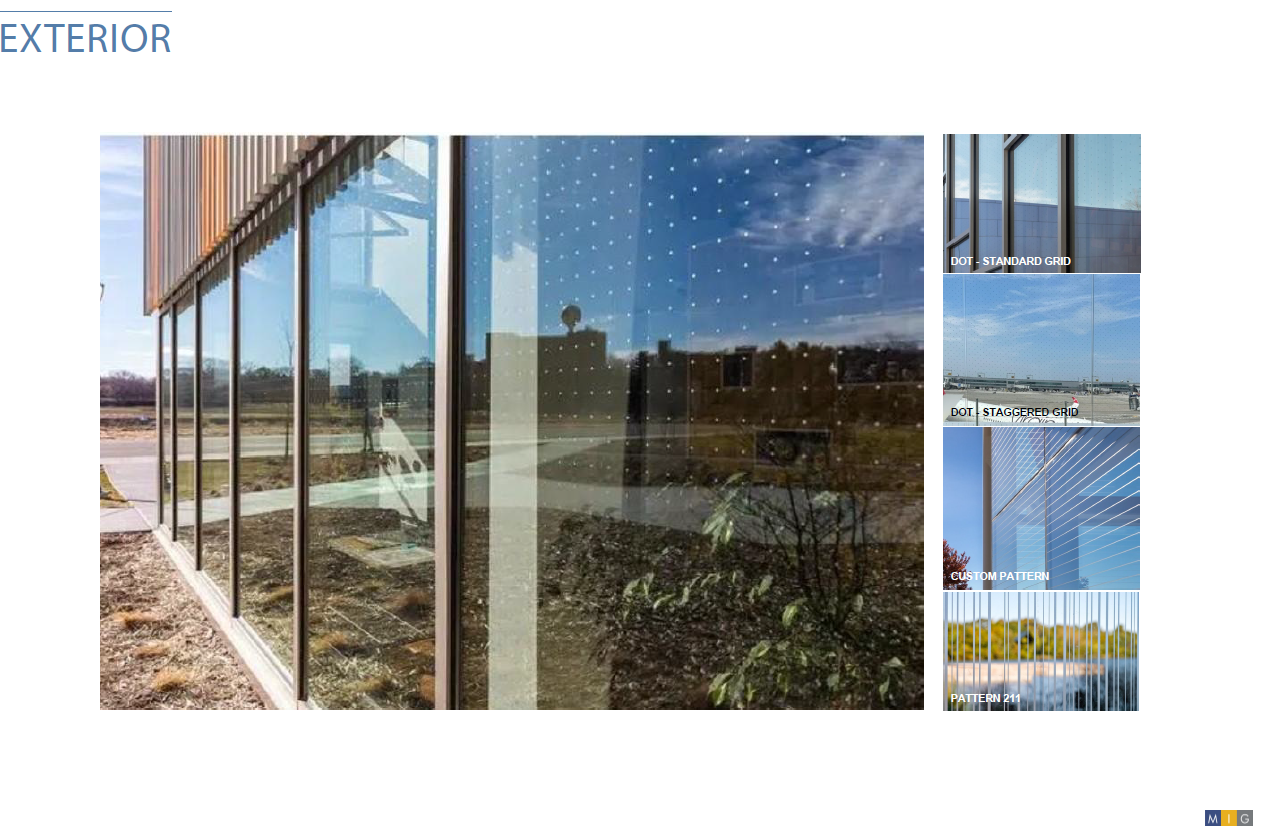
sample bird-friendly glazing treatments
Looking beyond the glass
There's another subtle design challenge that can be easy to overlook: what birds see in the glass.
A window can be treated with a bird-safe pattern, but the surrounding landscape can still create reflections that make the glass difficult for birds to distinguish from habitat. The building design is therefore also considering how foliage and landscaping interact with glass surfaces, including reducing opportunities for highly reflective views of vegetation immediately adjacent to windows.
It's a small example of a much larger philosophy: good conservation design considers the whole system rather than treating individual elements in isolation.
This fall, as millions of birds make their way south across the Pacific Northwest, BirdCast gives us an opportunity to look up — and to recognize that the skies above Clallam County are part of a much larger migration landscape.
The Olympic Coast Exploration Center is being designed with that landscape in mind.
Because conservation isn't just something we teach.
It's something we practice.
Want to watch migration happening in real time? Cornell Lab of Ornithology's BirdCast Migration Dashboard provides nightly estimates of bird migration across Clallam County and throughout Washington. Learn more about our local (and migratory) birds with the Olympic Peninsula Audubon Society.
