
Conservation on the Frontlines: From Seattle to the Olympic Coast
posted by Elise Ricci
It’s a steely gray day in the Pacific Northwest. As I drive south of Seattle, light rain taps against my windshield on the way to visit Casey McLean, Executive Director of SR3.
I met Casey just a few months ago over dinner at one of my favorite local spots, 909 Coffee & Wine in Burien. We sat down to talk about how we might work together. My work with the Olympic Coast Exploration Center began last August, and since then I’ve been connecting with people and programs that exemplify why building a new center on the Olympic Coast matters. Casey is one of those reasons.
Growing up in the Pacific Northwest, the water shaped my sense of wonder and connection to this region. From family camping trips along the Washington and Oregon coasts to seeing an orca while sailing in the San Juans, those experiences left me with a deep appreciation for the ecosystems that define life here — and a growing understanding that the beauty and wildlife we often take for granted are increasingly vulnerable to change. That connection is part of what drew me to the work of the Olympic Coast Exploration Center and the conversations we hope to create around conservation, science, and climate resilience.
That’s part of the reason we’re putting together a talk in Ballard on July 7 in conjunction with Climate Week. Casey will be joining a panel of local experts and conservationists who each have a unique story and perspective to share about the changing waterways of the Pacific Northwest.
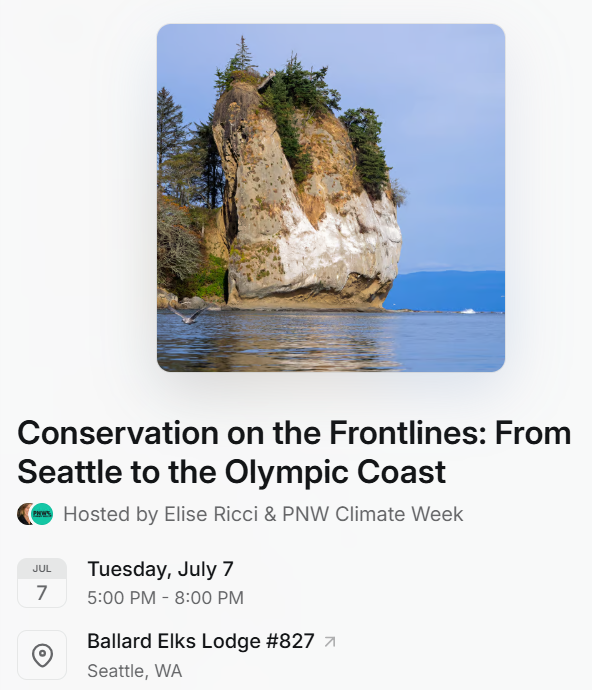
In addition to Casey, we’ll have representatives from the Lower Elwha Klallam Tribe, Chris Butler-Minor from the National Marine Sanctuary Foundation, Fred Felleman from the Port of Seattle, and Meagan McNally, a local nonprofit and environmental law expert. Each will share stories from their dedicated careers dancing with the delicate balance of ocean ecosystems, livelihoods, and waterways that quietly sustain all of us, and the depth of issues lurking under the surface that are worth noting.
This is Casey’s story.
Ever since she was a little girl, Casey has been drawn to the ocean. She studied marine science before earning her veterinary technician degree and spending decades working with marine wildlife across the United States — from manatees in Florida to whales in Alaska. Casey is an experienced wildlife biologist and veterinary technician with a deep understanding of marine mammal health and conservation.
She landed in Washington almost by accident and never intended to stay. But she quickly realized, with some disbelief, that there was no dedicated marine mammal hospital serving Washington State. Given the region’s vast coastline and relationship to the water, she was surprised.
So she built one.
After a decade of hard-earned blood, sweat, tears, and driving down the coast in a marine ambulance to retrieve animals who needed care, Casey is now standing firmly on her own two feet with a team and facility in Des Moines that is the only dedicated marine mammal hospital in Washington State. Casey says “There is an ever-increasing human impact on the marine wildlife we share a blue backyard with, and SR3 is on the frontlines of seeing some of those impacts.” Casey and her team rehabilitate and conduct conservation research on animals ranging from harbor seals to turtles, whales to dolphins. Since opening, they have rehabilitated five different endangered species, and also conducted vital research on the declining population of Southern Resident Killer Whales. SR3’s research has been a difference maker in providing science-backed data for local policy makers.
The Olympic Cost Exploration Center (the next chapter of Feiro Marine Life Center) is the marine mammal stranding response unit for more than 80 miles along the Strait of Juan de Fuca; this level of networked, responsive collaboration supports the quick assessment of stranded marine mammals. Several animals are transported to Casey’s facility. Deceased animals are recorded and cataloged.
Visiting Casey’s facility, I saw several harbor seal pups that had been brought in for a variety of reasons — a gunshot wound, poor nutrition, distended bellies — all of them receiving care and attention that would hopefully allow them to be released back into the water. It’s a story of hope, but also a warning about the climate impacts these animals face daily, and returning them to their native habitats isn’t always smooth sailing. Several don’t make it.
Happily, a full circle moment for a harbor seal pup occurred just this winter. Late last summer, I saw a young pup outside the current Feiro facility. Our animal care expert, Tamara Galvan, contacted Casey. Tamara observed and protected the pup (the mother did not return) then drove her down to Casey. All of the pups get named on a theme that rotates annually. Last year, it was pasta: Udon, Angel Hair, Vermicelli, etc. That particular pup- Angel Hair- recovered well with the OCEC’s intervention, and SR3's expert care. On a cloudy day in January, as Casey’s team and our animal care experts looked on, Angel Hair was released back into the wild.
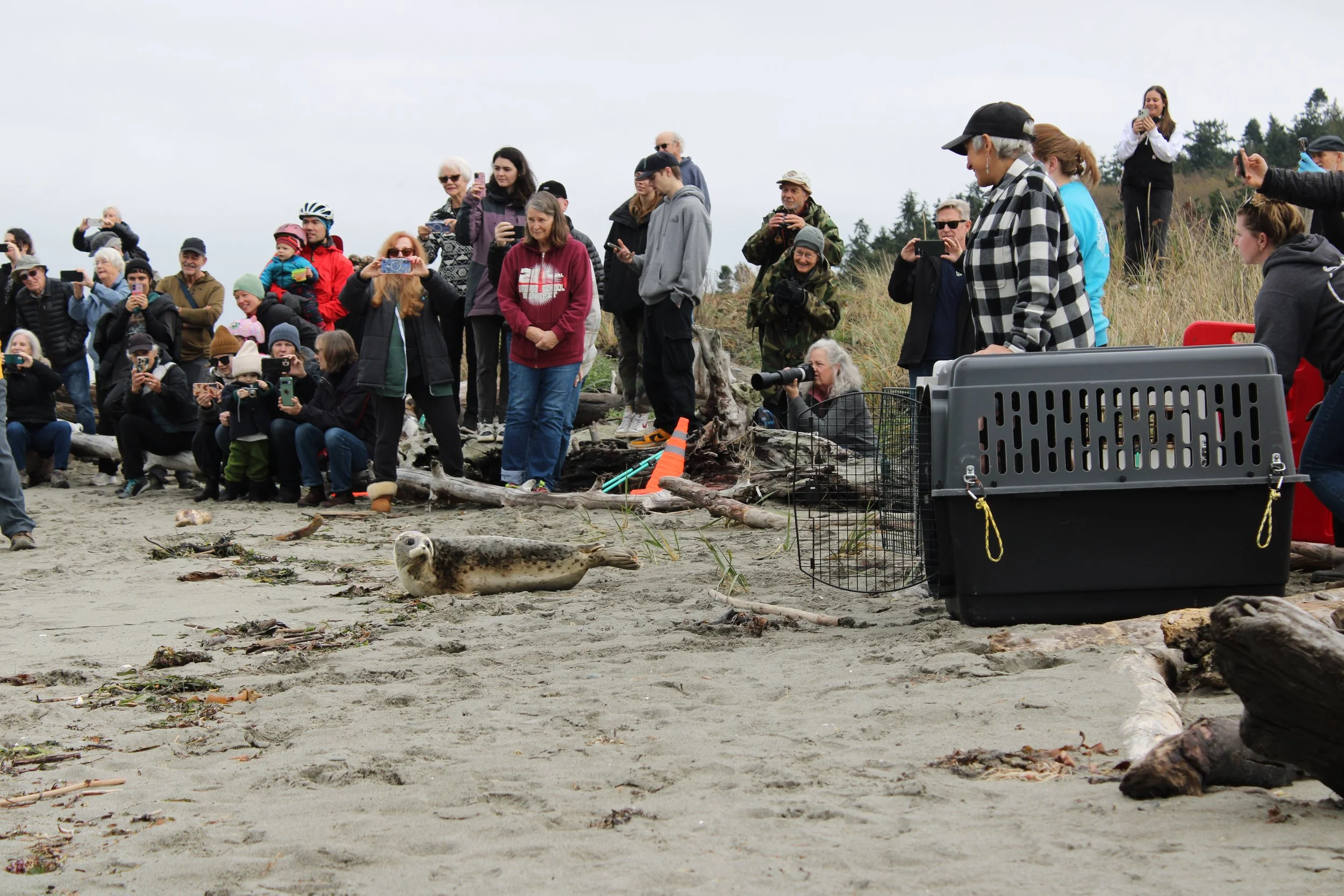
All activities undertaken in alignment with NOAA permit #24359
As we look toward Climate Week and all of the amazing communities coming together to do what we can to protect our waters and the systems and animals that rely on them, we hope you’ll join us. Whether to share ideas, connect to resources, or simply take in the stories of climate impacts in the PNW, we hope you will listen in. You’ll come away with a deeper understanding of the waters in your own backyard.
Ocean Supporter Event Sponsors
